Hi again from the heart of the Middle East… We visited the walls, streets, and shops of the Old City in Jerusalem 3 weeks ago. Firstly; we were in the Muslims Quarter, the largest part of the Old City of Jerusalem, Last week we walked through the Via Dolorosa in Christ Quarter, and today we are in the Jewish Quarter.
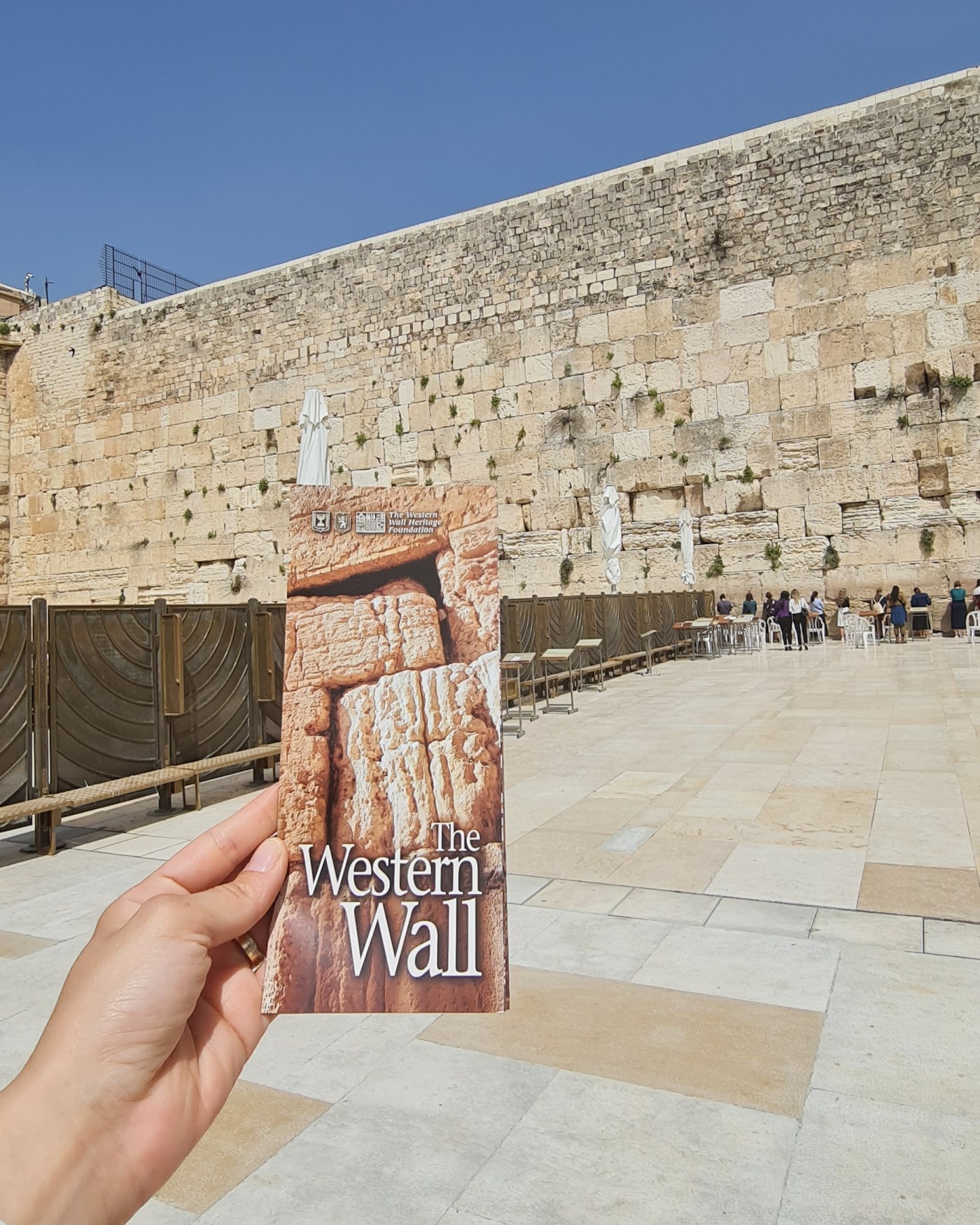
Western Wall, Wailing Wall, and for Muslims Burak Wall… Known as the holiest site in the Jewish faith, its significance lies in the fact that it is the last remnant of the original retaining wall which surrounded the Second Temple.
Since all the prophets passed through these lands, and there was only the Old City thousands of years ago, every prophet left a mark on every stone, and today we follow these traces they left behind.
It is not a surprise that the eyes of the whole world are on this land. Every building, every structure, every street seems the same, so it is not easy to understand the reason of the fight at first glance.
Then you discover the difference between looking and seeing. A piece of stone sometimes symbolized the memory of a loved one buried by a Jew, sometimes the liberation struggle of a country, and sometimes the reason for existence. Now let’s see the different meanings of stones on the Wailing Wall…
The reason why it is called the Wailing Wall is due to the fact that this is the only trace of the temple.
Prophet Solomon wants to build a holy place of worship. Young, old, men and women, all work for 11 years to build the Temple of Solomon. Prophet Solomon utters these words when the Temple is completed.’ This Temple stands until the Day of Judgment.’ In 586 BC, this 1st Temple of the Jews (Solomon Temple) was destroyed by the Babylonian King Nebuchadnezzar. Later, Herod rebuilds the temple in B.C 20, known as the 2nd Temple. This time, in A.D. 70, the Roman Emperor Titus demolished the Temple. The Jews believe that this wall is the only remaining structure from this temple and they cry for it.
There are also those who think that this wall is called the Wailing Wall because the moisture on the wall never evaporates and remains wet all the time, even in the hottest weather.
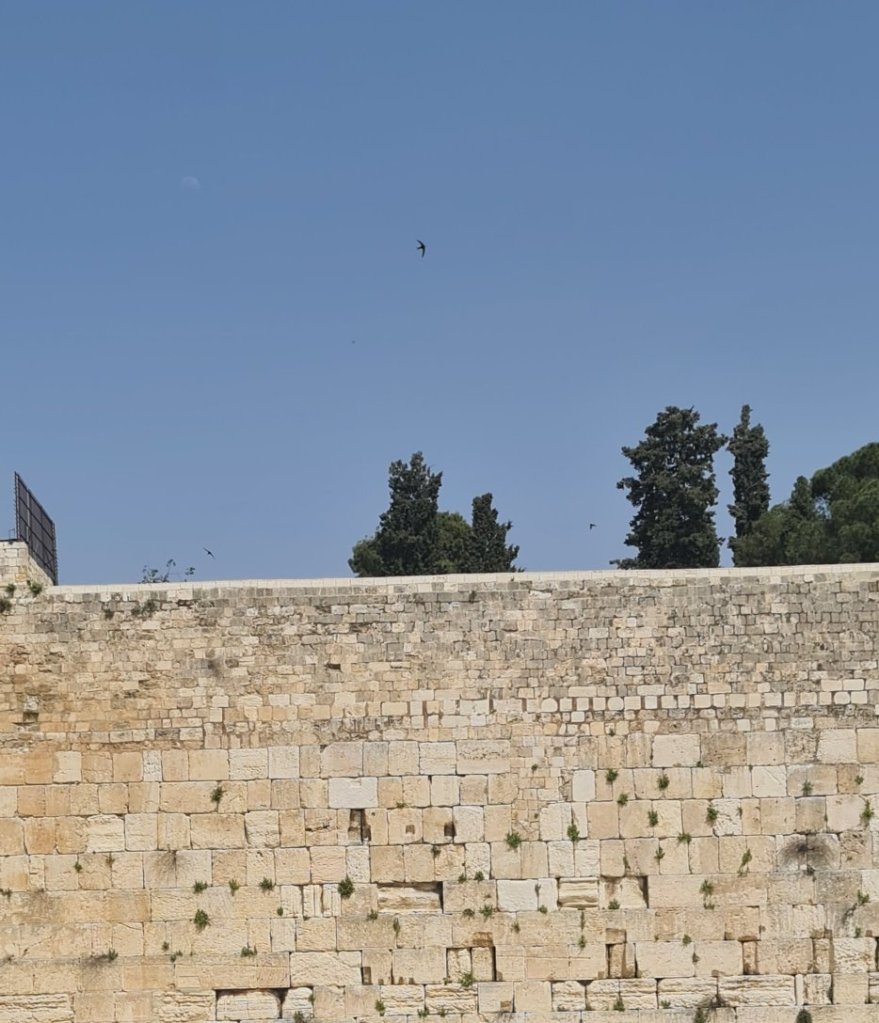
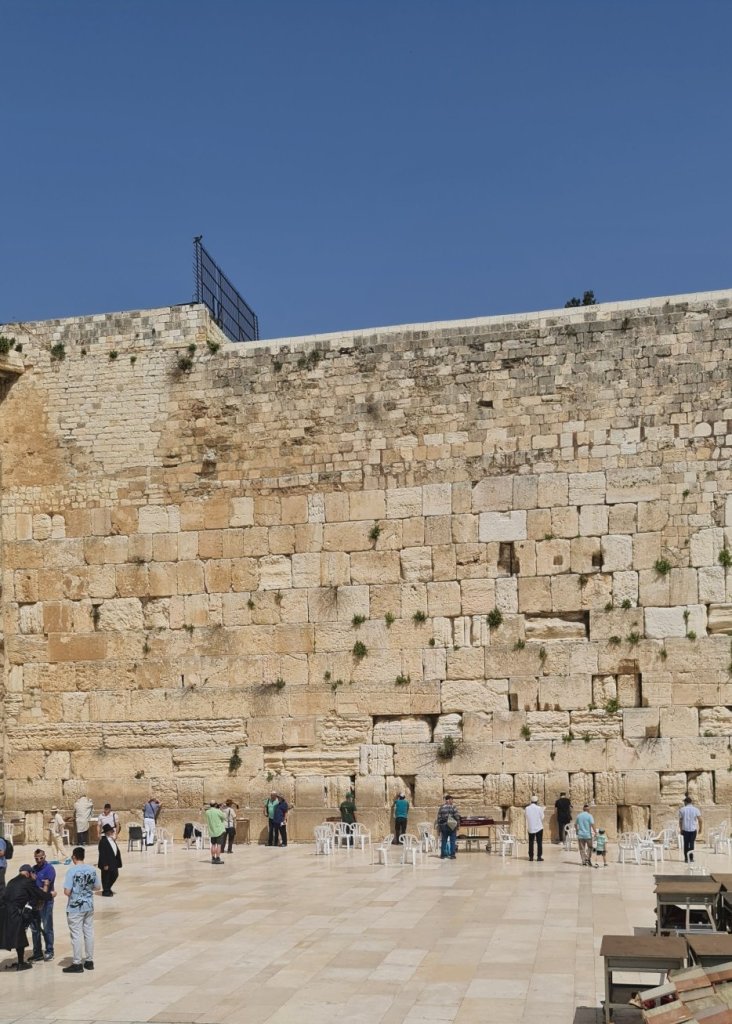
The Wailing Wall is 485 meters long, and 18 meters high from the ground level. It is known that the weight of each big stone is 100 tons. If you pay attention to the photo, there are small stones in the upper part and large stones in the lower part. When Jerusalem was under Ottoman rule, Jews came to Suleiman the Magnificent and said that they wanted to worship where their temples were destroyed. Suleiman the Magnificent allows. Until he gave permission, Jews were praying in the area of the Jewish cemeteries in Mount of Olive. There is another very interesting piece of information about this period. By order of Suleiman the Magnificent, Mimar Sinan is repairing this wall.
When the Israelis took over this place in 1967, they dug up the ground and uncovered this high wall, and created a place of worship for themselves. Until 1967, The Morakanlar (Persians) lived here. Selahaddin Eyyubi, who had a very strict structure, placed the Morakans in order to prevent the troubles that may occur here. In 1967, the houses here were demolished and this area was created.
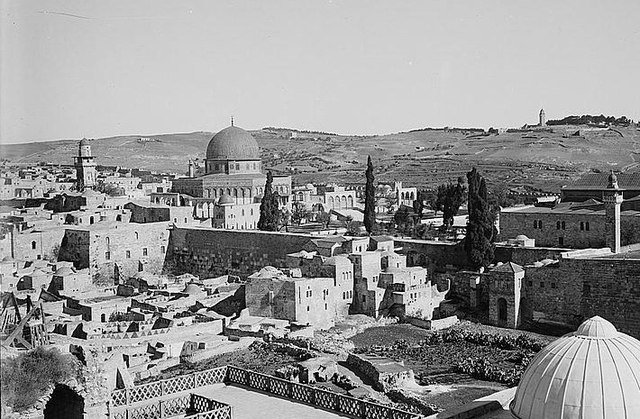
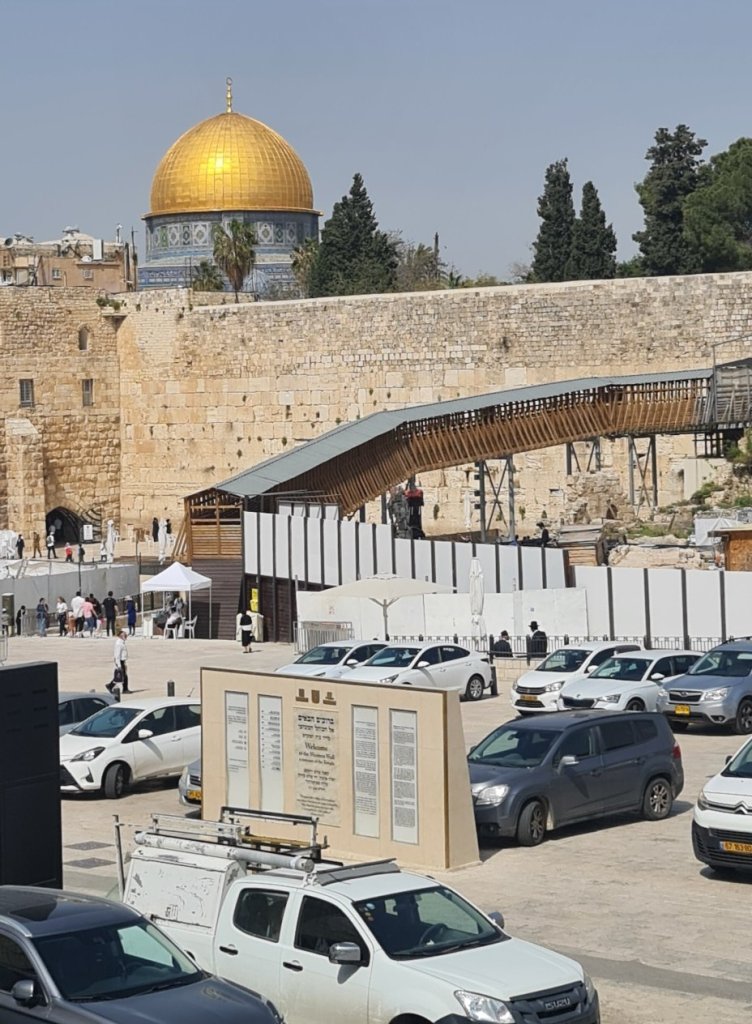
Muslims call this wall Burak Wall because the Prophet Muhammed tied Burak’s house to this wall on the day of mirac in which he ascended to heaven. In addition to Wailing Wall, the Jews call this wall the Western Wall as well. They thought that it formed the western side of their destroyed temple. This wall also has an important feature for Christians. They believe that it was one of the places where Jesus began to spread Christianity.
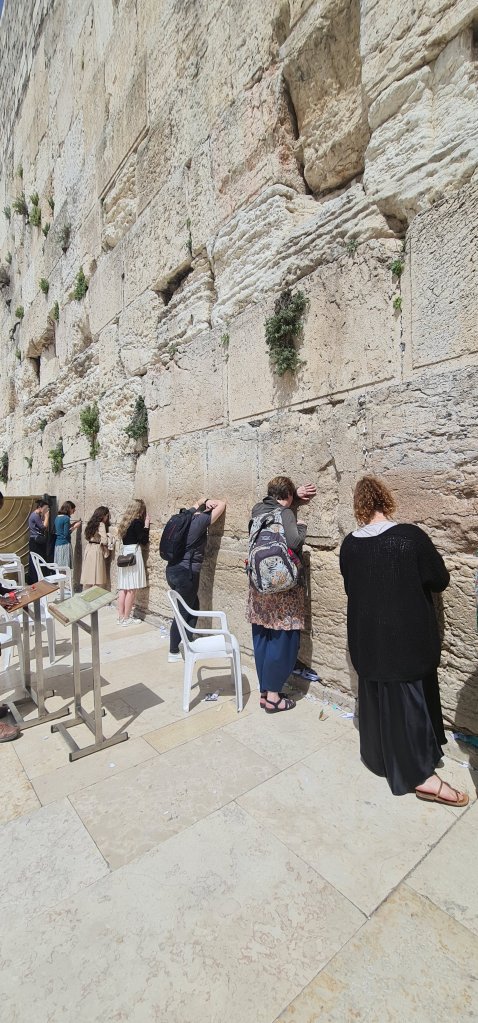
Jews gather here to worship on the Sabbath, which covers the period between Friday evening and Saturday evening. Other than that, they pray to the Wailing Wall, which is open 24 hours a day, with their hats or kippahs on their heads. Foreigners are not allowed to stay at the Wailing Wall on the Sabbath.
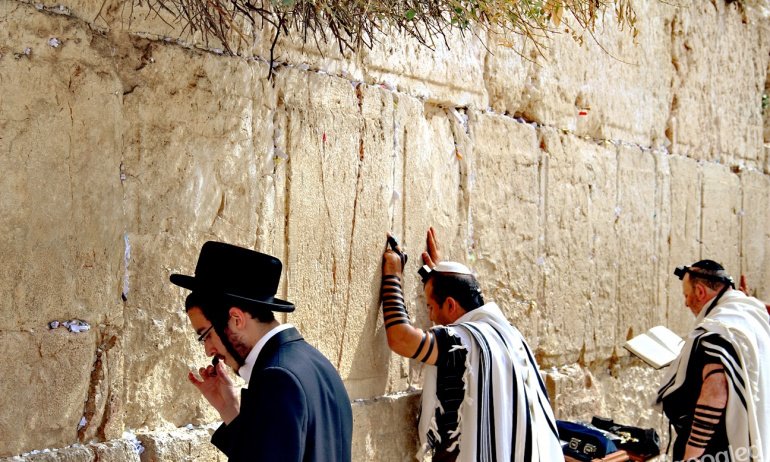
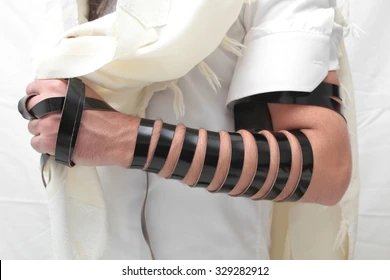
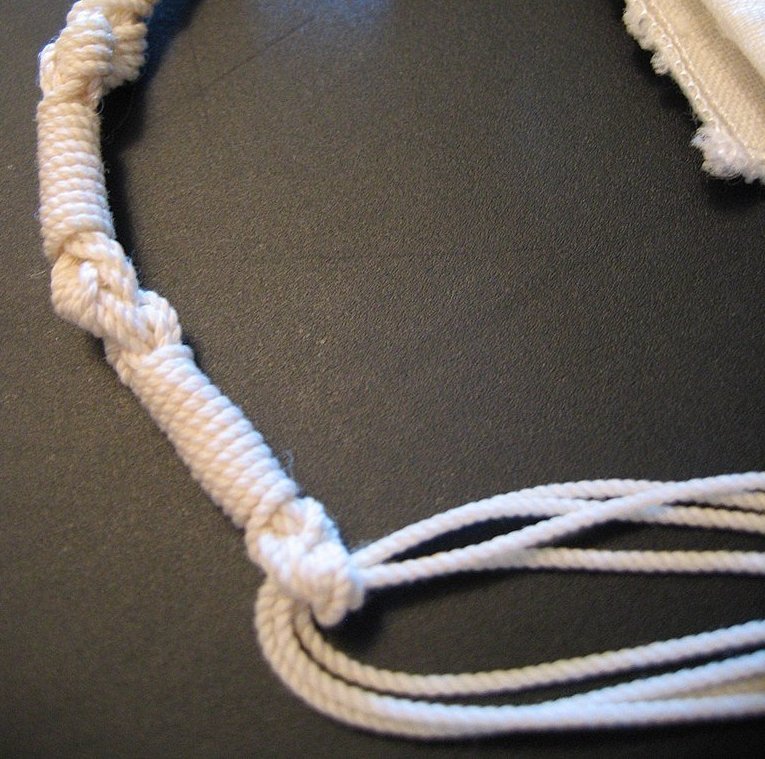
At the Wailing Wall, the Jews pray by chanting and reciting passages from the Torah. Soldiers, children, workers, and in short, all Jewish people come together to worship and sometimes even dance. As Jews at the Wailing Wall pray, the leather strap on their left arm wraps around the entire arm. They do this to express their devotion to God. The ropes hanging from the white inner shirts consist of 613 wires. This represents the 613 commandments and prohibitions written in the Torah according to the Jewish faith.
Right next to the Wailing Wall, there is the tunnel that Israel has created as a result of the excavations. We go underground to see these tunnels.
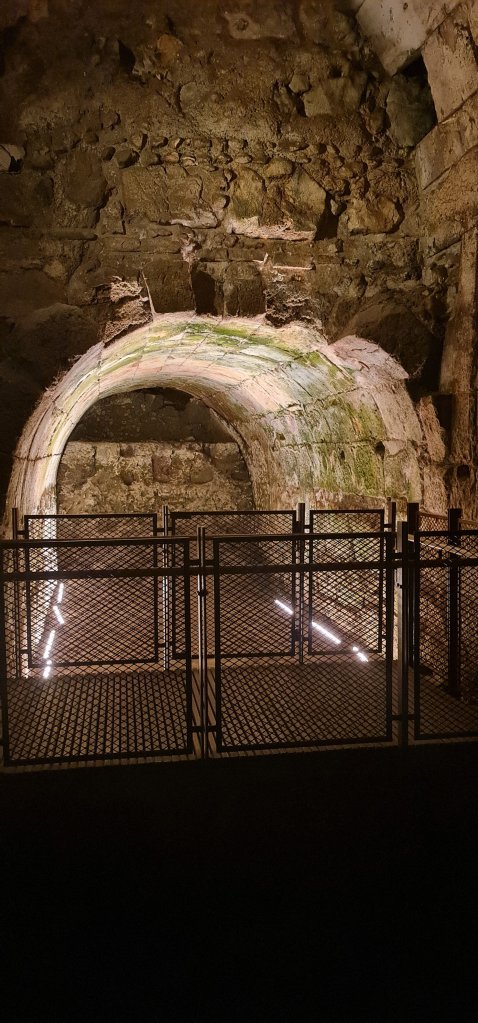
In the first meters of the tunnel, there is a small presentation about the history of the Temple of Solomon. In fact, the tunnel is under the bridge connecting the Temple of Solomon to the city, so as you progress through this tunnel, you reach the roots of the Wailing Wall. The meaning of old stones found here is explained with small animations. Their claims are that the Wailing Wall is located on the west side of the Temple of Solomon, and so today, the Christian pilgrimage route, Via Dolorosa (Path of Passion), the Church of the Holy Sepulcher, and in our precious Al-Aqsa, located inside the temple of that period. There is no proof of this right now, they explain it with models and simulations. In any case, if there was evidence beyond stories and myths, the ground would undoubtedly be shaken…
We are moving towards another very important structure for Jews.
Tomb of David
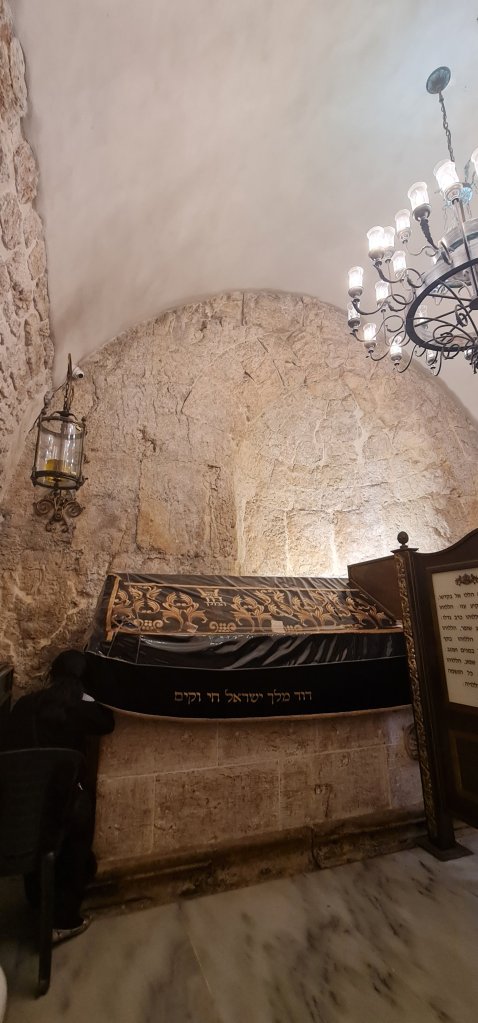
Tomb of David, the founder of Jerusalem, the great king of Israel. During the periods when Jews were not allowed to see the Western Wall, the Jews watched the Western Wall and the Temple Mount from the courtyard at the top of this building.
Saul, the first king of the Kingdom of Israel, dies in a battle, and a fight for the throne begins between his son and David. The youngest of 7 brothers, David was known for his courage and being at the forefront of wars at a young age. He was also thought to have spiritual power. The most important character of that period, the Prophet Samuel insists on David and at last, David ascends to the throne. The reason why David is so precious to the Jews is that he was the king who founded Jerusalem, which they saw as the capital, and created land for the construction of the Temple Mount.
After David reigned for 36 years, his son Solomon takes the throne and he built Temple Mount. In short, the place that the Jews see as a holy temple today was built on the land prepared by David by the order of his son, Solomon.
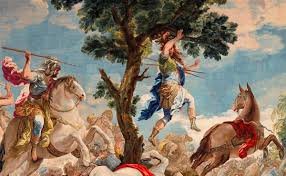
David’s family experienced throne fights and rebellions. His son Absalom rebels against his father David. David’s army kills Absalom. You may remember this from the “Moun of Olive” post, an inscription from Absalom’s tomb in the Kidron Valley. Red-haired Absalom, whose hair hangs from a tree.
When we leave David’s tomb, we encounter a new surprise. The place where Jesus ate his last supper and the great church depicting the death of Mary, The Basilica of the Dormition. Here, each street takes one on a new journey.
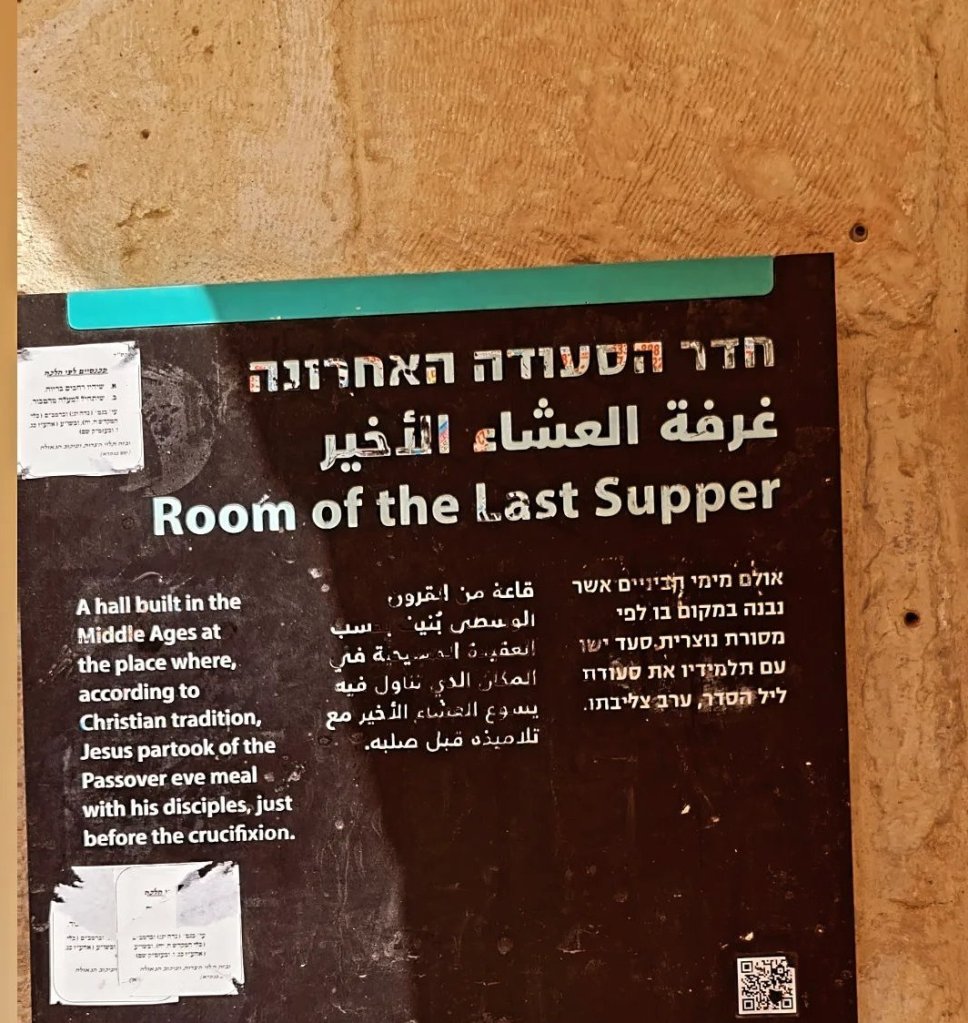
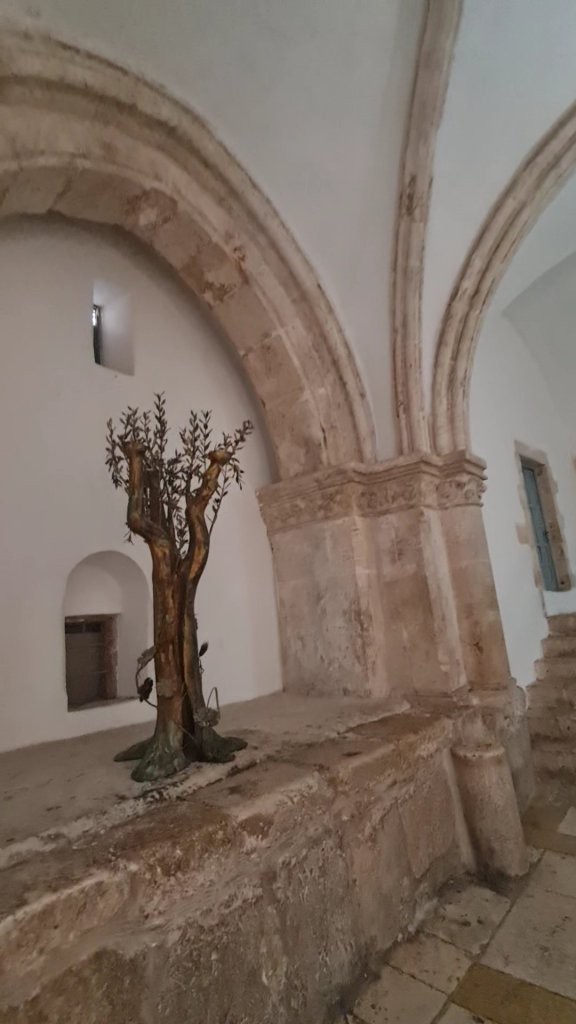
Here; It is also very valuable for Christians as it is the place where Jesus ate his last meal, so Jesus met with the apostles, and the holy spirit descended on the apostles. The church we see right next to it is seen as the “Mother of Churches” by many Christians because it is the place where Mary lived and fell into eternal sleep.
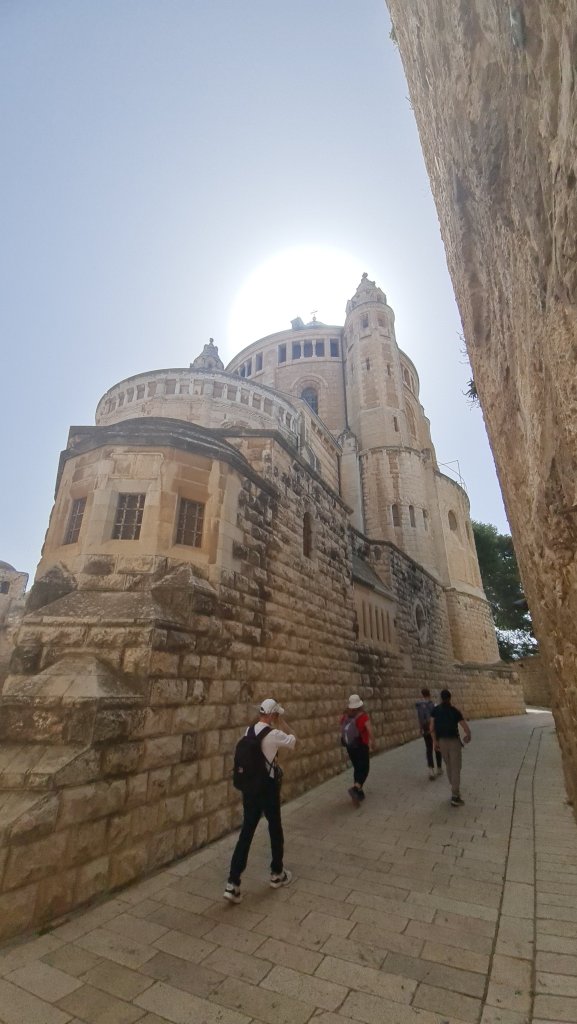
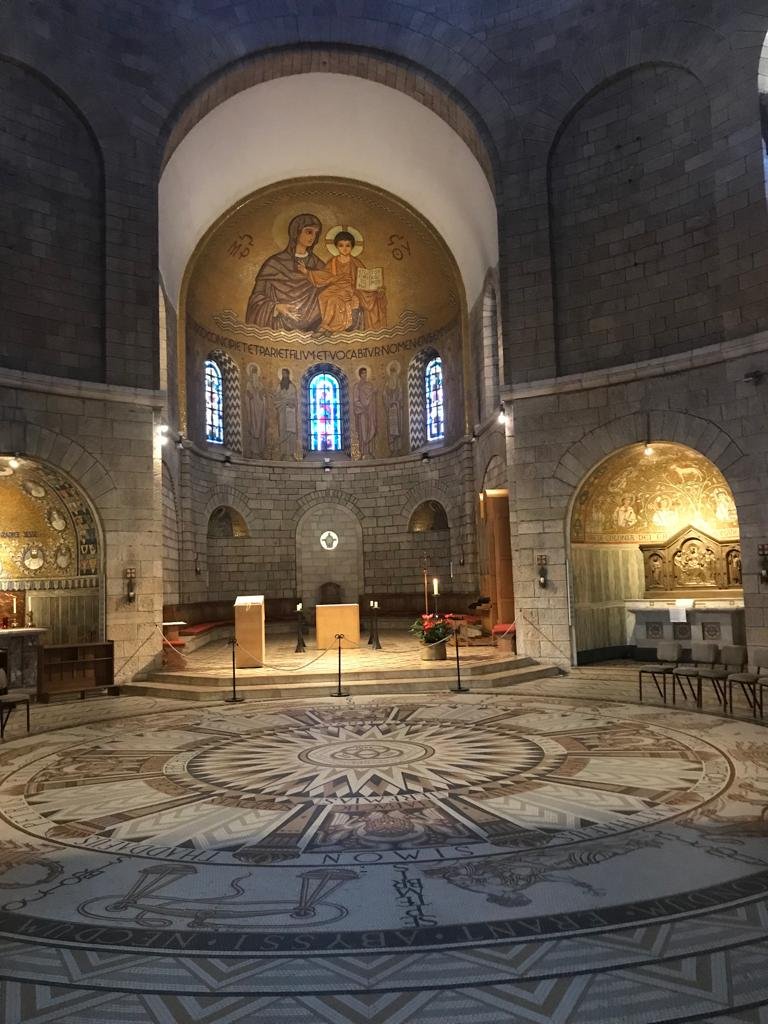
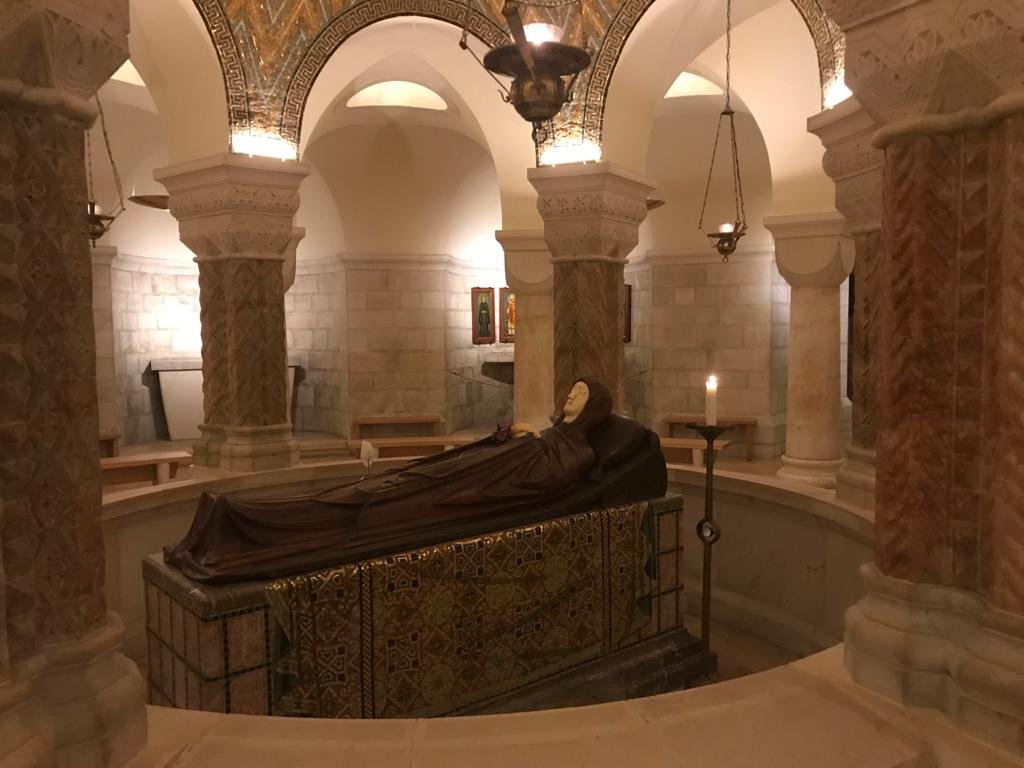
Let’s share an important note here. Although this place has been built over and over again since the time of Jesus, its final version was made by the last German Emperor and King of Prussia Willem II. The church was started to be built in 1900 and completed in 1910. At that time, this was Ottoman lands, so you might wonder how it happened. We briefly mentioned it in our “Mountain of Olives” post. At that time, the Ottoman Empire was seen as a “Sick Man” in Europe. Since the second half of the 19th century, European States thought that the empire would collapse and they competed with each other to get their share of the Ottomans. They do this by erecting consulates and churches in the holy city of Jerusalem from the second half of 19. century. For example, the British opened consulates in Jerusalem in 1839, France in 1843, and Spain in 1854. Likewise, on the Mount of Olives, Dominus Flevit was built on the land purchased in 1891, and Mary Magdalen, one of the most important churches for Christians, was built in 1886. It is possible to multiply examples. What is important here, this church, which is attributed as the “Mother of Churches”, was also built in the same period.
It should not be forgotten; There are only steps between this church and the place where Jesus’ last supper and the place where David lived and where his tomb is located. The Jewish quarter houses a great deal of religious, cultural, and political history in a small space.
A cemetery found here hosts the grave of a very important foreigner for Jews, a German businessman from Nazi Germany, Oskar Schindler.
Movie Recommendation; Schindler’s List
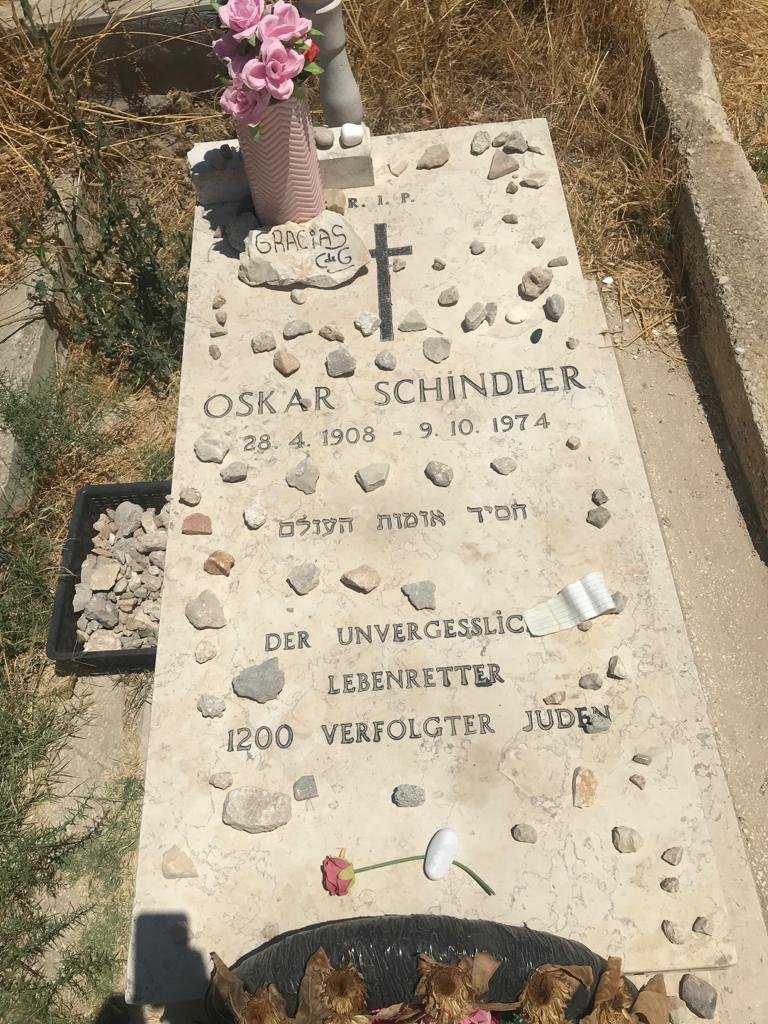
Oskar Schindler ensures that a generation is not wiped out by saving the lives of 1200 Jews during the Holocaust. He left a will to be buried on the temple hill in Jerusalem just before his death. His name is still very valuable among Jews today. The name Oskar Schindler is featured on the “Yad Vashem” monument in Jerusalem, where there is a list of non-Jews who saved the lives of Jews, and he is commemorated every year.
See you next week… Warm Regards
 Ortadoğunun Kalbinde
Yorum bırakın